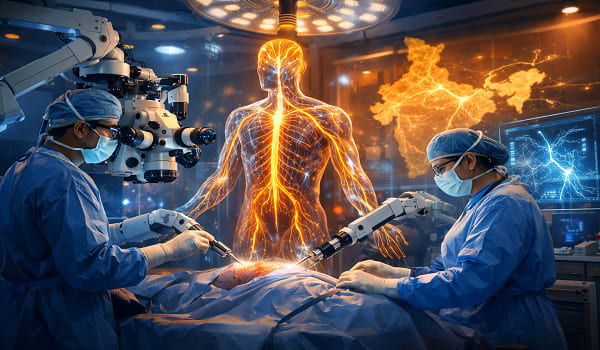
A highly specialised area of neurosurgery, orthopaedics, plastic surgery, and hand surgery, peripheral nerve surgery is about to undergo a major revolution in India. This topic has changed over the last ten years from being a specialised speciality to a quickly developing field with significant clinical, academic, and research momentum. The Indian Society of Peripheral Nerve Surgery (ISPNS), the top professional organisation in the country, is committed to promoting clinical excellence, education, and research in brachial plexus and peripheral nerve care, and is at the centre of this movement.
The Present Situation: Foundation and Growth
ISPNS began as a non-political, non-profit organisation in December 2011 and has since expanded to become India’s largest forum for managing injuries to the brachial plexus and peripheral nerves. The society, which has more than 200 active members from the fields of neurosurgery, orthopaedics, plastic surgery, and associated specialities, has a clear goal: to enhance therapeutic outcomes for patients with nerve injuries, share knowledge, and advance research.
A knowledge ecosystem is being sparked by the society’s initiatives, which include scientific meetings, biennial conferences, cadaveric dissections, live surgical workshops, and its official Journal of Peripheral Nerve Surgery (JPNS). These initiatives enable both seasoned physicians and aspiring surgeons to push the limits of care.
Prospects for the Future
Progress in Academics and Research
ISPNS’s annual research magazine and many academic events demonstrate the organisation’s dedication to promoting scientific inquiry. With topics like “Recent Updates in Peripheral Nerve Surgery,” platforms like ISPNSCON offer a rich environment for physicians to present case series, talk about breakthroughs, and choose future paths.
Additionally, India’s increasing interest in neuroprosthetics, nerve regeneration techniques, and peripheral nerve repair technology presents an exciting future for both engineers and clinical researchers. Global adoption of best practices and shared learning can be accelerated by partnerships with international organisations like the International Society for Brachial Plexus & Peripheral Nerve Injury.
Developing Skills via Practical Training
Developing technical proficiency requires workshops that emphasise practical skills, such as cadaveric dissection and pain procedures. These virtual experiences aid doctors in mastering the sophisticated reconstruction techniques, nerve blocks, and advanced microsurgical techniques that today’s patients require.
Growing Need for Specialised Care
The population is becoming more affected by peripheral neuropathies, diabetes, and trauma, which increases the demand for prompt, high-quality nerve treatment. India is a top choice for peripheral nerve treatments due to its affordable healthcare system, which strikes a balance between accessibility and top-notch expertise.
Technology Integration
Emerging innovations, including high-resolution nerve imaging, AI-assisted diagnostics, and neuromodulation workshops, suggest that advanced tools will play a more significant role in diagnosis and treatment planning. ISPNS’s commitment to incorporating cutting-edge technologies into educational programs ensures India’s surgeons stay at the forefront of global trends.
Important Difficulties to Overcome
Workforce gaps and low awareness
Peripheral nerve surgery is still not widely known among patients and general practitioners, despite significant institutional expansion. Successful outcomes, particularly in trauma and entrapment neuropathy, depend on early identification and referral. Furthermore, compared to the patient load, there are still relatively few highly qualified microsurgeons with specialised nerve competence, especially outside of big metropolitan areas.
Technology and Infrastructure Obstacles
The distribution of sophisticated surgical platforms, imaging modalities, and nerve repair instruments, which are frequently costly and resource-intensive, in Indian healthcare settings is not uniform. For care delivery to really improve, more people must have access to this technology.
The Research and Innovation Ecosystem Needs to Be Strengthened
India’s peripheral nerve research environment needs more regular financing, multicentric trials, and translational studies that can directly influence surgical decision-making and policy frameworks, even if ISPNS and its JPNS offer a strong scholarly base. Innovation can be accelerated by improved collaboration between fundamental scientists, doctors, and industrial partners.
Market and Regulatory Difficulties
Before being used in clinical settings, nerve repair technologies, such as bioactive conduits or graft substitutes, must meet stringent regulatory requirements on a global scale. India needs to establish frameworks that promote safe innovation and expedite the introduction of effective tools and equipment for the benefit of patients.
Prospects for the Future
Peripheral nerve surgery in India has a promising future, but it will take persistent effort and teamwork. As a professional community and academic centre, ISPNS is in a unique position to continue this trend. We can revolutionise the provision of peripheral nerve care for millions of patients by expanding educational outreach, developing research talent, promoting resource investment, and cultivating national and international partnerships.
Peripheral nerve surgery is more than simply a speciality for trainees and young surgeons thinking about their career path; it’s a frontier where accuracy, empathy, and creativity come together. ISPNS extends an invitation to all interested parties to embark on this adventure and contribute to the development of nerve surgery in India.